
Cover
THE PROSPECTORS 48 Minutes by
Graeme Beck
Final Draft MM
EXT. LEEUWIN AT SEA - SUNSET
OLD FILM LOOK SEPIA images
Of the Leeuwin in sail
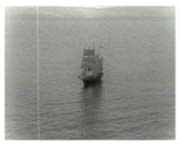
Recreates a time gone by.
Close-ups of
Water
And rigging.
NATURAL sound effects.
DON V.O.)
This is the story of men and women who have made nations great. Those who had a dream, and in many cases died for it. It is the story of courage, perseverance, tenacity and greed. It is a world story, for these people belonged to the world community.
EXT. LEEUWIN - EVENING
We match dissolve out of OLD FILM LOOK to COLOUR as our
Presenter stands next to rigging on deck of the Leeuwin.
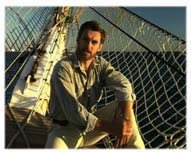
Sunset background.
DON
1
And whilst this story is set in Australia, it could be in any country, where people driven by the insatiable search for great wealth risked all. The stakes were high and the success rates were low. Many characters became part of our folklore, in some cases the myth overtook the fact, but there is no denying one fact, these were no ordinary people, they were the prospectors.
MUSIC up.
INT/EXT. GRAPHICS/MONTAGE - DAY/NIGHT
Stylised OLD FILM LOOK jittery titles:
ILW and GRUBSTAKE PRODUCTIONS
Present
THE PROSPECTORS

Over OLD FILM LOOK layered silhouetted images of:
Men pushing wheelbarrows,
Digging,
Panning,
Dryblowing
And the Leeuwin sailing.
This is the story about men and
MUSIC down.
2
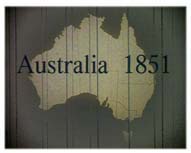
INT. PAINTINGS
An early painting of sparsely populated Sydney.
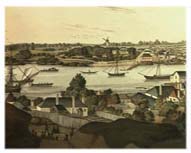
DON V.O.)
Australia in the 1850's was a far cry from today. Few people ventured from the coast and to travel any distance was an accomplishment.
EXT. DIRT TRACK - DAY
A OLD FILM LOOK image of an approaching man on a horse.
Small sub-title; 'Re-enactment.'
DON V.O.)
A bullish man by the name of Edward Hargraves was about to change all that.
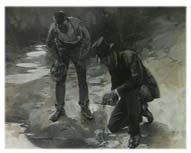
EXT. BUSH - DAY
Continuing OLD FILM LOOK as Hargraves rides his horse through the bush.
DON V.O.)
Hargraves had recognised the similarity between Bathurst and the Californian goldfields which he had recently returned from. He was certain there was gold there and after much ridicule from the Sydney public the lone figure rode
3
into the bush in the beginning of 1851. It was a ride into history.
Introduce another rider.
DON V.O.)
Along the way he recruited a guide, a young man by the name of John Lister, and on the 12th of February they arrived at Lewis Ponds creek.
EXT. RIVER - DAY
OLD FILM LOOK of the two men riding along the river bank. (They carry with them a small pick, tin dish, bricklayers trowel, pen knife and grease proof paper.)
HARGRAVES V.O.)
I found myself in country I was anxiously longing to behold again. My recollection had not deceived me. The resemblance to that of California goldfields could not be mistaken. I felt myself surrounded by gold.
The young rider dismounts and scoops up handfuls of water.
HARGRAVES V.O.)
My guide went for water to drink and after making a hasty repast, I told him that we were now in the gold fields and that the gold was under his feet. I dug a panful of dirt and washed it.
HARGRAVES dismounts and with his small pick digs at the river bank.
He scrapes the dirt into his dish, adding water.
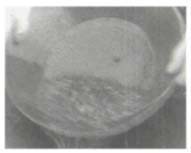
And swirling with a rhythmic motion.
Anxiously he palms away the top layer of gravel from the dish and swirls again.
HARGRAVES V.O.)
The young boy stared in disbelief, their in the bottom of the pan lay
4
specks of the precious metal.
With his pen knife he lifts the grains of gold and puts them in a slip of greased paper.
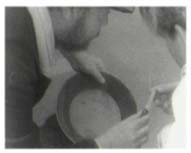
HARGRAVES V.O.)
I then washed five panfuls in succession, obtaining gold from all but one. To describe my feelings at that eventful moment would be impossible.
EXT. ACROSS RIVER - DAY
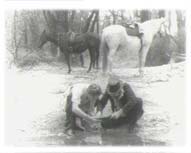
OLD FILM LOOK image of the jubilant men panning for gold as two young men, TOM and WILLIAM TOMS, ride up.
DON V.O.)
And so the first gold rush in Australia was about to begin. The two men were joined by Lister's friends, James and William Tom and Hargraves set off to claim his reward for discovering Australia'S first goldfield.
EXT. RIVER BANK - DAY
A match-dissolve from OLD FILM LOOK to COLOUR of DON as he walks along the river's edge.
5
DON
Meanwhile the boys continued to work along the river bank where they achieved little success. In April they moved several miles to the junction of Summer Hill creek where in five days they recovered four ounces of the precious metal. Finally this was payable gold.
INT. NEWSPAPER CLIPPINGS
Old clippings of the time.
DON V.O.)
Word spread slowly when Hargraves first announced his discovery.
INT. PAINTINGS
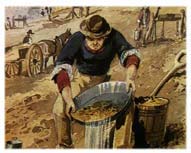
We pan through paintings of the early goldfields.
DON V.O.)
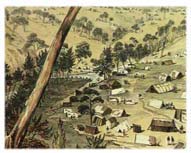
In May over four hundred claims were being worked but in the following months hundreds more crazed gold seekers arrived. The Government quickly imposed a tax of 30 shillings a month on each digger and in June the Commissioner of Lands reached Ophir, as it was now been called.
COMMISSIONER V.O.)
6
I saw over 1000 prospectors camped along the creek and I collected the tax with little trouble as fortunes were being won by the early diggers.
DON V.O.)
As the rich surface gold quickly ran out and new ground was found in the surrounding areas.
INT. PAINTINGS/NEWSPAPER CLIPPINGS
July 1851, The Sydney Morning Herald reports on the massive nuggets.
DON V.O.)
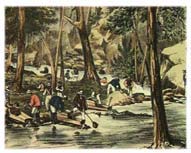
In July, fifty miles to the north of Bathurst a prospector brought into town several gold studded quartz nuggets totaling over 1200 ounces of gold, and Bathurst went mad again.
EXT. RIVER BANK - NIGHT
DON sits by a large fire.
DON
In recognition of the initial discovery, Hargraves was given a reward of ten thousand pounds from the New South Wales government. However storm clouds started to appear on the horizon. Lister and the Tom brothers protested about Hargrave's reward claiming they were the true discovers of the first payable goldfields. The tenacious Lister perused justice for over forty years and finally, just before Hargraves death, the second inquiry found in favour of the boys.
INT. OLD COURT ROOM - DAY
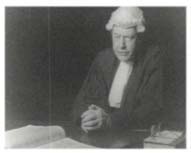
OLD FILM LOOK of a moodily lit wood lined room sits a judge, in reflective mood and in period costume.
7
JUDGE
Although Mr Hargraves is entitled to the credit of having taught the claimants, Messrs W. and J. Tom and Lister, the use of the dish and the cradle, and otherwise the proper methods of searching for gold, which his visit to the californian goldfields enabled him to do, your committee are satisfied that Messrs Tom and Lister were undoubtedly the first discoverers of gold in Australia in payable quantities.
EXT. RIVER BANK - NIGHT
COLOUR and DON still sitting by the fire.
DON
After forty years and two official enquiries justice was finally done, or was it? For their efforts, Lister and the Tom brothers received the sum of just over three hundred pounds each. But Hargraves find had captured the imagination of the population and thousands of prospectors started moving into the interior searching for gold.
INT. SOVEREIGN HILL - DAY
OLD FILM LOOK images of various dressed people in period costume serve behind shop counters.
WENDY V.O.)
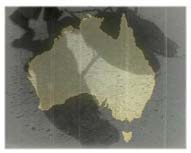
The finds at Bathurst spurred Victorian businessmen into action. Fearing the newly separated colony of Victoria would loose its population to New South Wales, it
8
also offered substantial rewards.
INT. SKETCHES/PAINTINGS
Relevant sketches and paintings of the early days in Ballarat.
WENDY
In August of 1851 a prospector named Regan took shelter from the rain under a wattle tree. While sitting there he idly scratched at the mud with his foot and found gold and the incredibly rich Ballarat goldfields.
MUSIC UP
Continue relevant paintings.
Sketches
And
More paintings.
Reports in the MELBOURNE ARGUS
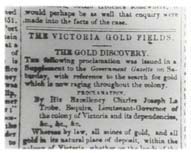
WENDY V.O.)
The early prospectors would dig hundreds of ounces in a day, ten years wages, while others would return shortly to Melbourne with twenty thousand ounces or more of gold concealed in their Drays. Melbourne went mad with gold fever.
INT. PAINTINGS
Prospectors leave Ballarat.
9
WENDY V.O.)
Within a month, Ballarat's thousands of shallow pits were soon depleted of their rich pickings.
EXT. SOVEREIGN HILL - DAY
OLD FILM LOOK of prospectors working sluicing cradles by the waters edge.
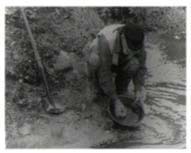
Period dressed people go about there business while others ride in stagecoaches.
WENDY V.O.)
It wouldn't be till later that the huge underground reserves would be discovered. The prospectors then rushed to the next find just 40 miles to the north, at Mount Alexander. Here 15 square miles of rich ground was there for the taking.
EXT. OLD SHOP FRONT (KAL. TOURIST MINE) - DAY
Old shop front MORPHS to COLOUR and WENDY, our female presenter is now introduced as she walks out.
WENDY
Thousands walked away with tons of gold dug out of the shallow ground in the first few weeks. Victoria rapidly took over from New South Wales as the golden capital of Australia as thousands of gold seekers flooded to the new fields. 1851 was a big year in Australia for gold discovery and in November, Margaret Kennedy discovered another massive find at Bendigo.
10
INT. PAINTINGS
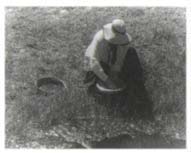
MARGARET V.O.)
We got a great deal of gold in the first few weeks while working alone. We found a lot in the banks of the creek and in the sods of the grass. You could shut your eyes and get gold in a dish anywhere.
INT. NEWSPAPER CLIPPING
The 'Argus' newspaper, 13th December, 1851.
WENDY V.O.)
When the journalist Henry Frenchan announced the find as "The christmas Box to the Nation" in December, Bendigo was rushed.
EXT. OLD SHOP FRONTS (KAL. TOURIST MINE) - DAY
WENDY walks down the isolated street.
WENDY
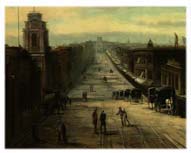
The pedestrian population of Melbourne was visibility depleted as the town went crazy in the haste to find their own El Dorado's. Ships lay idle in the harbour as whole crews deserted. Businesses closed as staff and managers left for the fields. The roads were crowded with drays and wheelbarrows in a mixed confusion of professional people and labourers. The next couple of years saw new fields opening up all over the state and Melbourne boomed as tens of thousands of hopefuls arrived from all over the world and the Governor of the time became increasingly
11
concerned.
EXT. PAINTINGS
An authoritarian voice picks up the story over paintings of Melbourne and the workings at Ballarat.
GOVERNOR V.O.)
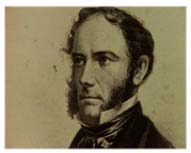
The fledgling community is being put to great inconvenience when servants and labours head off to the fields. Masters have been seen driving their own drays. Ladies of respectability and ample means are obliged to do their own washing.
INT. OLD BANK (KAL. TOURIST MINE) - DAY
Wendy walks into the deserted bank.
WENDY
To restrain the population and raise more money for the cash strapped colony, Governor Hotham increased the licenses for digging. For the large sum of three pounds per month a digger was allocated eight square feet and each square rarely produced enough gold to pay for the licence. By mid 1854, events were escalating towards what was to become Australia's first rebellion against government.
INT. PAINTING
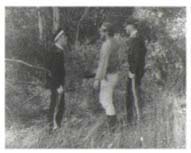
A uniformed man next to a shabby digger.
12
WENDY V.O.)
The prospectors were becoming increasingly frustrated with the harsh and unreasonable methods used in checking licenses. Their were other injustices too which compounded their grievances. The prospectors wanted the right to vote, to parliament representation and an enquire into police intimidation.
DON
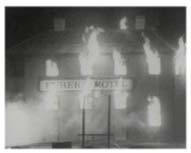
In 1854 a young prospector named Scobie was kicked to death by the owner of the Eureka hotel. He was later acquitted by the corrupt magistrate, but his hotel was burnt down by the angry locals.
INT. NEWSPAPER CLIPPINGS
November 25th 1854 the 'Ballarat Times' encouraged revolt.
DON V.O.)
The Ballarat times called for revolt.
INT. PAINTINGS
Slow pan up a painting of Lalor.
13
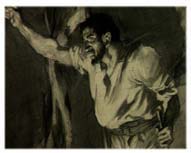
LALOR V.O.)
The grievances under which we had long suffered and the brutal attack of that day flashed across my mind [and with the burning feelings of an injured man] I mounted the stump and proclaimed "Liberty."
EXT. MINE HEAD (KALGOORLIE TOURIST MINE) - DAY
DON
A young Irishman by the name of Peter Lalor became the prospectors leader and in November of 1854 a stockade of timber was built.
INT. PAINTINGS - AFTERNOON
Pan across a Eureka painting.
OLD TIMER 3
(poetic voice)
Brave Lalor with dauntless dare, his men inspiring to wolf or bear, defiance bidding he made us swear, be faithful to the standard, in victory or death.
Together 500 old timers swear the oath;
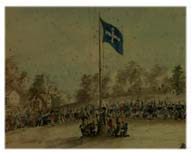
OLD TIMERS 500
We swear by the Southern Cross to stand by each other and fight to defend out rights and liberties.
EXT. TENT (KALGOORLIE TOURIST MINE) - AFTERNOON
A sweaty DON walks around a miner's camp.
DON
14
In these hot and humid conditions the prospectors were preparing to defend their rights and the Eureka flag was raised. By december the second, one thousand occupied the stockade with four hundred troopers and police in the hills nearby. A tense stand off developed over two days, and at three A.M. on Sunday the 4th, when just one hundred and twenty people remained, as most had returned to their tents, the troopers attacked.
INT. PAINTING
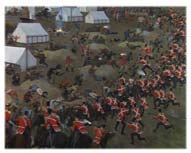
The Painting lit by explosive and flickering light.
Dramatic MUSIC.
Sound effects of
GUNS FIRING.
GUNS RELOADING.
Images of the fighting.
More images of fighting.
Several more images of the fighting are portrayed.
MUSIC down.
EXT. TENT (KALGOORLIE TOURIST MINE) - SUNSET
15
DON now sits around a campfire outside the miner's tent.
DON
Within thirty minutes the rebellion was smashed. As dawn rose, the carnage was obvious, the stockade was burning and history had been written.
INT. PAINTING
A painting depicts the aftermath of Eureka.
Solemn MUSIC.
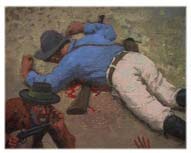
DON V.O.)
Five police were killed and the prospectors losses are not known exactly.
EXT. KALGOORLIE CEMETERY - DAY
WENDY strolls into shot.
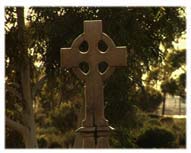
WENDY
Lalor listed 14 dead and eight fatally wounded. The battle at Eureka was a vital chapter in Australia's history. The Government finally conceded the prospectors demands and replaced the expensive monthly licence fee with a yearly 'Miner's Right', which also carried with it the right to vote.
16
INT. PAINTING
A painting continues to depict the aftermath of Eureka.
Continue Solemn MUSIC.
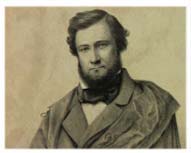
LALOR V.O.)
I said my young Australian that the fight was lost and won. But oh our hearts were heavy at the setting of the sun. Yet ere the year was over freedom rolled in like a flood. They gave us all we asked for, when we asked for it in blood.
EXT. KALGOORLIE CEMETERY - DAY
We see a close-up of WENDY only.
WENDY
From the turmoil and chaos came recognition and Peter Lalor went on to become a member of the Victorian government.
INT. PAINTINGS
Relevant paintings of Europeans setting up camp while Aboriginals look on.
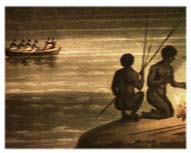
DON V.O.)
Australia in the 1850's was essentially a European settlement in an Aboriginally dominated land, but the discovery of gold changed all that. Over the next ten years hundreds of thousands of prospectors converged on the country from all over the world trebling the countries's population.
17
INT. PAINTINGS
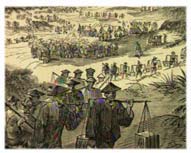
Relevant paintings of Chinese prospectors working at the diggings.
DON V.O.)
The industrious Chinese arrived by the thousands. By mid 1850 there were over 60,000 Chinese on the goldfields. At Ballarat, they were making good money out of abandoned European workings and their presence began to be resented. The Government, through taxes and other measures began to restrict Asian immigration. The Chinese prospector were then forced to supply more of the ancillary services, such as market gardens and laundries, as these were occupations which offered little competition to Europeans.
INT. OLD PHOTOGRAPHS
WENDY
The mines in Victoria went deep as huge reserves were discovered in the ancient creek beds below. The 'Welcome Stranger' nugget was unearthed just 1 foot below the surface. A massive lump of gold weighing over 2000 ounces. The largest nugget in the world.
EXT. TENT (KALGOORLIE TOURIST MINE) - NIGHT
DON still sits around a campfire outside the miner's tent.
DON
Australia was becoming an Alladians
18
Cave of precious metals as the prospector made his way up the east coast of the country. Queensland had seen a few small finds before and Conoona, 20 miles outside of Rockhampton was rushed in 1858, when 60 ounces of its course dark gold was put on display in a shop in Sydney. Gold around the Bathurst region was being overworked and prospective diggers deluged ship owners with demands for travel. Thousands descended on the small field and the local residents of Rockhampton believed a second Bendigo had been found. But the diggings dried up just as quick as they were found. While prospectors fought over a few ounces behind them an 'Ironstone Mountain' containing an astonishing 250 tons waited to be discovered. Thousands turned back for home and passed the mountain and Rockhampton returned to become what it had before the rush. Four houses and a pub. It wouldn't be till 15 years later that the town's rich secret would be unlocked.
EXT. OUTBACK CREEK - (SWAN VALLEY) - DAY
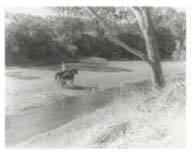
OLD FILM LOOK image of James Nash panning for gold. His billy boils nearby.
His ladened horse grazes nearby.
WENDY V.O.)
Australia's next major discovery was in Gympie, in 1867. James Nash, like thousands of others had come north from the New South Wales and Victorian goldfields. He was a quiet and secretive man who always travelled alone. At a creek while waiting for his billy to boil he panned for gold and hit some colour. Further up the creek he found a spot rich in nuggets.
19
EXT. OUTBACK CREEK - (SWAN VALLEY) - DAY
OLD FILM LOOK morphs to COLOUR with WENDY now in the same location.
WENDY
Nash rode the 60 miles to Maryborough to restock and buy tools. He tried to pay this with the gold he had found but had trouble trading the nuggets.
INT. PAINTINGS
JAMES V.O.)
I tried several stores and two banks but could not sell my gold. Times were so bad that they hardly knew what gold looked like. At last I tried Mr Southerden's store a second time and he allowed me three pounds for it, one in money and the rest in tools and rations.
EXT. OUTBACK CREEK - (SWAN VALLEY) - DAY
WENDY strolls around the creek bed.
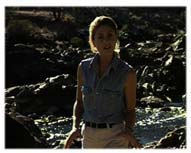
WENDY
While at Maryborough, Nash managed to keep his discovery at Gympie Creek a secret, no mean feat in those times when even the hint of a gold find would have spread like wildfire. He slipped out of town making sure he wasn't being followed. Back at Gympie, Nash recovered 75 ounces of gold in six days. Now convinced he was onto a genuine discovery he raced back to Maryborough to register a claim.
20
INT. PAINTINGS
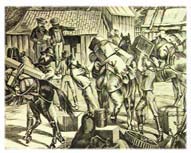
WENDY V.O.)
Word spread and there was a stampede with most of the stores being cleaned out within a day. Pandemonium broke out and fights flared up all over the fields as each tried to peg a claim.
EXT. OUTBACK CREEK - (SWAN VALLEY) - DAY
WENDY
Once the richness of Gympie field was realised, even more people came. Farmers left their land and the sugar harvest came to a standstill. Those too late moved further north to the new discoveries at Ravenswood and Charters Towers, then eventually all the way to the harsh tropics of the Palmer River.
EXT. ROCKY OUTCROP 1 (DARLING RANGES) - DAY
DON walks around a rocky outcrop.
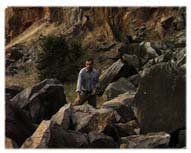
DON
The 'Ironstone Mountain' still held its secret. Traditionaly Ironstone wasn't gold bearing rock so the early prospectors who had seen it quickly moved on. And when the Morgan brothers brought the renown Sydney geologist, Dr James Robertson, to the area to look over a couple of potential copper prospects they showed him the mountain too.
EXT. ROCKS - DAY
21
OLD FILM LOOK tracking shot of a granite outcrop.
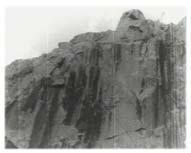
ROBERTSON V.O.)
There's complete absence from the stone. It's ferruginous in character, without a trace of copper in it.
EXT. ROCKY OUTCROP 1 (DARLING RANGES) - DAY
DON continues at the rocky outcrop.
DON
After several frustrating days looking over various sites he became increasingly annoyed at the Morgans who brought him all this way to "non-existent copper deposits." Undeterred the Morgans went back another day. Rain had set in this time and the water glistened on the rocks. Boulders that looked deceptively ordinary before when dry now sparkled in the sunlight. They were too ignorant to share in the geologists prejudice against ironstone and had it assayed anyway. And Mount Morgan went on to contained 250 tons of the yellow metal. A mountain of gold. It was so wealthy in fact that one of its owners financed further prospecting in the Persian Gulf area which eventually lead to the formation of British Petroleum.
EXT. SALT PLAINS (KALGOORLIE SALT PLAINS)- DAY
At a desolate salt plain WENDY picks up the story.
22
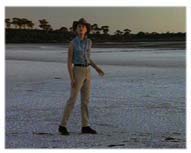
WENDY
The prospector were a special breed and in those early pioneering days they tolerated incredible hardships. They were at the mercy of the elements both natural and human.
INT. PAINTINGS
The paintings portray confrontation with the Aboriginals and early settlers.
WENDY V.O.)
The local aboriginals were suspicious of these new people walking their land and their attitudes often led to fatal confrontations.
INT. PAINTINGS/SKETCHES
Sketches of early prospectors dying in the desert.
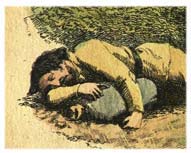
WENDY V.O.)
Water was always a problem as the prospector moved further north, and the lack of it for most of the year killed many in a painful death. And when it did rain, floods and disease wiped others out. Dead prospectors would be found with pounds of gold on them while others had eaten there boots to survive.
INT. EARLY PAINTINGS OF TASMANIA
23
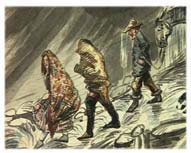
WENDY V.O.)
They encountered different hardships in Tasmania. The arid hostile desert and oppressive heat became impenetrable forests, mountainous terrain and freezing temperatures.
EXT. HEAVILY WOODED AREA - DAY
In a deeply forested area our presenter fights his way through the bush.
DON
In 1871, James Smith ventured on a five month trek into this almost impenetrable region of Tasmania. With nothing more than his bush skills and a gut instinct he panned the creeks that eventually led him to Mount Bischoff and a fabulously rich mountain of tin.
INT. OLD PHOTOGRAPHS
Old photographs of the mining company.
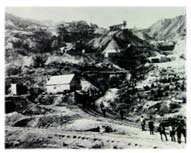
DON V.O.)
The Mount Bischoff Mining Company was formed and Smith received over four thousand of the twelve thousand five pound shares. Years later the price quoted never fell below eighty pounds and dividends paid by the company eclipsed those of any other mine in Australia.
24
EXT. HEAVILY WOODED AREA - DAY
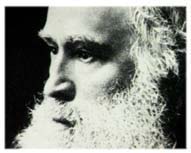
DON
Smith's discovery changed the course of Tasmanian history and was the forerunner of several mineral discoveries which dragged the state out of recession and laid the foundation for what became a thriving mining industry.
INT. PAINTINGS/PHOTOGRAPHS
Old photographs and sketches of the Adelaide to Darwin telegraph line being built.
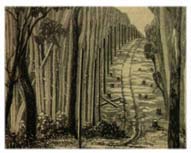
WENDY V.O.)
The first traces of gold in the Northern Territory were discovered in the early 1870's by workers on the overland telegraph line between Adelaide and Darwin. A prospecting company formed in 1872 by a South Australian grazier, X.X. Bagot, found the first gold bearing reef at Yam creek.
INT. OLD PAINTINGS/PHOTOGRAPHS
Old paintings and photographs depict Darwin during this era.
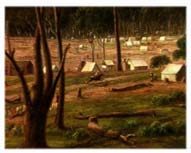
WENDY V.O.)
25
A second reef was discovered in the Howley district and these discoveries caused the inevitable rush as the word spread to the other states. The town of Darwin was seething with gold fever. New parties arrived every week, but many weren't equipped for the rigors of the Territory's hot tropical climate. Disease was rampant and the incessant rain and humidity had a detrimental effect on many.
EXT. ROCKY OUTCROP 3 (KALGOORLIE) - DAY
WENDY walks around another interesting rocky outcrop.
WENDY
There was no fresh food or vegetables, flour and rice was infested with weevils and like life on many other goldfields, alcohol was the undoing of many. Some less scrupulous merchants peddled a concoction of kerosene, flavored with Worcester sauce, ginger and sugar. Malaria became wide spread with scurvy and dysentery killing many others.
INT. OLD PAINTINGS/PHOTOGRAPHS
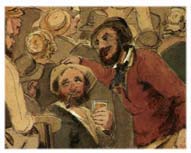
OLD TIMER 2
The misconduct in the Northern Territory was beyond anything in the history of gold mining. A number of costly equipped prospecting or picnic parties' were established by syndicates down south. Many of these men were totally unacquainted with prospecting and some never proceeded further than Darwin. Others advanced just 40 miles into the interior or never lost sight of the telegraph posts while others planted themselves on the banks of a creek and quietly received their pay. When their grog and provisions
26
ran out they simply struck camp and pronounced the Territory a 'duffer'.
EXT. ROCKY OUTCROP 2 - (KALGOORLIE) - DAY
At a rugged rocky outcrop DON continues the story.
DON
One of the most spectacular discoveries in Australia's history was made beyond these hills. It was a discovery of such magnitude that even today the company is still one of the largest companies in Australia. Three hills rose above the barren landscape and under them astonishing riches. Riches that would exceed those of Ballarat and Bendigo. In 1883 an unassuming man by the name of Charles Rasp discovered mineralised rocks there. Assay results showed silver and lead, but in uneconomical quantities. Undeterred he formed a syndicate with six other men and a shaft was dug. A public float was announced selling quietly to the public. Eighteen months later the rich silver loads were discovered and in some places they were over five hundred feet wide. The original investors became some of the wealthiest people in Australia. Within ten years thirty five thousand people were living in Broken Hill.
INT. PAINTING OF BROKEN HILL
27
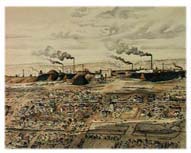
DON V.O.)
And BHP became the largest company in Australia and held that crown for over one hundred years.
MUSIC up.
Large slabs
Of glowing steel
Roll out of
The mill.
EXT. KIMBERLIES - DAY
It is spectacular country around sunset.
DON V.O.)
The Kimberly region at its best is the most spectacular country on the Australia continent. At its worst, during the heat of the summer wet season, it can be hell on earth. As the initial booms in the other states began to wane, the last, and without a doubt the greatest, frontier was about to be conquered.
EXT. KIMBERLIES - (NORTH KALGOORLIE) - DAY
At a scenic rocky outcrop DON appears.
DON
Western Australia had seen a few prospecting parties before, but it wasn't until Charles Hall, a frugal and canny bushman, along with John Slattery began to search for gold in the north of the state that
28
Western Australia's incredible richness began to be disclosed. On their first trip they found ten ounces. On their second they found over eighty ounces, including a nineteen ounce nugget. Within months Halls creek became the magnet to the longest overland gold trail Australia had seen.
INT. PAINTINGS
WENDY V.O.)
Men and women from all over the world trekked to the Halls Creek find in 1886. They walked or rode from Queensland, across the Northern Territory or followed the telegraph line up from Adelaide. Many disembarked at Derby and walked the three hundred miles to the most remote goldfield in Australia.
EXT. COAST - DAY
A desolate isolated beach. The WIND blows ominously.
WENDY
Others were simply put ashore at Wyndham, where not even a jetty stood. Alone they set off for the Halls Creek gold. Those who made it found the flies, mosquitoes and heat were plentiful. Gold and water was scarce. Many died of scurvy and dysentery. Within five years the surface gold had played out and the reefs could only be worked by larger companies with heavy crushing machinery. But by this time the prospectors had discovered gold further south and
29
had moved on.
INT. OLD PROSPECTOR'S CAMP (TOURIST MINE) - DAY
DON walks around the rugged interior of a prospector's camp.
DON
Several legends were born during this period. The ragged thirteen, a lawless band of misfits terrorised their way across the north. Russian Jack hauled more than his own swag to the fields and carried many a burnt out digger on to the next water hole. A group of Afghans and a 'mountain maid' made a lot of money out of fields and it wasn't from selling gold.
INT. PAINTINGS/PHOTOGRAPHS
The paintings and photographs depict early workings.
WENDY V.O.)
Fields down South were opening up quickly and Western Australia was becoming the colossus of gold mining. In July of 1890, J.F. Connelly discovered a reef three hundred miles from Geraldton and the die was well and truly cast. The Yilgarn was about to become the gateway to the richest goldfields Australia has ever known.
EXT. SOUTHERN CROSS - DAY
From a dust covered run down building in Southern Cross DON appears.
DON
By 1892 Southern Cross already had several small gold mines operating, but in August things were at a particularly low ebb. Ore treatment problems, the lack of water and trouble with mining machinery had increased production costs on the
30
three main mines here. Wages were cut and the miners went on strike. Then Arthur Bayley rode in from the East with 554 ounces of gold. The slump in Southern Cross was over and the town became the gateway to the world famous Coolgardie goldfields.
EXT. BUSH (KALGOORLIE) - DAY
OLD FILM LOOK images of Bayley and Ford riding through the bush.
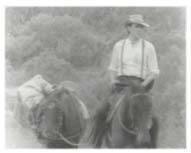
DON V.O.)
Earlier, Bayley and Ford had ridden out into a particular hard area of country East of Southern Cross to prospect for gold.
EXT. BUSH - EVENING
OLD FILM LOOK of a darkening sky and our silhouetted horsemen setting up camp.
BAYLEY V.O.)
We reached what is now know as Coolgardie at 5pm. Water was becoming scarce so we camped near a small rock pool.
EXT. BUSH - DAY
OLD FILM LOOK of Bayley leading his horse through the bush.
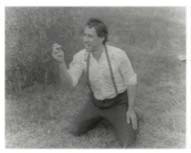
BAYLEY V.O.)
In the morning we went for the horses. I was leading my horse back over what was later called Fly Flat when I picked up a piece of gold, about half an ounce. I think we were more excited about
31
that little piece of gold than any we found later. In the next hour we picked up nearly a hundred ounces.
EXT. MAIN STREET OF COOLGARDIE - DAY
Return to COLOUR and a very high shot of the main street with DON walking across the road.
DON V.O.)
Fly flat later became the main street of Coolgardie. It was a triumphant discovery for Bayley and Ford, but already the new field had been touched by tragedy. The area had already been pegged by a mane named Ansden.
EXT. BUSH - DAY
OLD FILM LOOK reveals a skeleton.
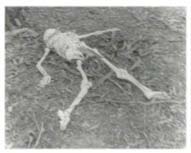
DON V.O.)
But he never registered his claim as his skeleton was found nearby.
EXT. MAIN STREET OF COOLGARDIE - DAY
Return to COLOUR and DON.
DON
When Bayley returned to Southern Cross to register his claim he was followed back here by most of the population of town.
32
EXT. LARGE OUTCROP OF SMALL QUARTZ ROCKS - DAY
OLD FILM LOOK tracking shot of glittering specks of gold in quartz.
YOUNG TIMER V.O.)
We found gold galore. We could see it glittering in the sunlight for at least twenty yards in front of us. On top of the ridge was the cap of the reef, studded with gold.
EXT. OLD COOLGARDIE PAINTINGS/PHOTOGRAPHS
WENDY V.O.)
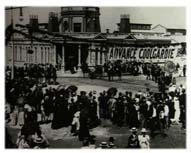
Thousands followed from around the world and Coolgardie fast became a town. Overnight the price of horses rose from five pounds to fifty and in no time 26 hotels lined the main street.
EXT. MAIN STREET OF COOLGARDIE - DAY
DON walks down the footpath.
DON
Three Newspapers were established and even A Zoo had even being laid out. It was a mecca to over twenty thousand people. Hundreds would be seen wondering off into the bush at the slightest mention of gold. On one occasion Billy Martin turned up in town with forty ounces.
DON holds forty ounces of gold.
DON
Siberia, about seventy miles east from here was meet with the standard rush. The trail lead some to gold, and, as in many cases in the desert, a painful death from lack of water.
33
EXT. CAMPFIRE - LATE AFTERNOON
DON sits by a campfire in the middle of the bush.
DON
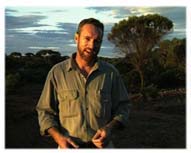
Perhaps the richest patch of gold came out of a small hole not far from here. In a hole just 4 foot by 5, 10,000 ounces of gold was dollied and Coolgardie was spell bound. The hypnotic spell that the Londonderry lease cast was more on what was thought to lie deeper. Investors pursued the young John Mills to sell and the new owners floated the 'Londonderry Gold Mining Company' in impressive style. Word of these finds spread like wildfire across the world. Prospectors came from the ends of the earth seeking their fortunes. And just over twenty miles East of here the greatest goldfield Australia had ever known still lay waiting.
EXT. OLD WORKINGS - DAY
WENDY climbs out of an old working.
WENDY
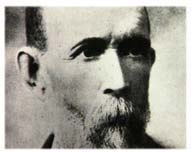
Paddy Hannon at nearing fifty was no youngster to prospecting. For thirty years he had searched the fields across Australia and New Zealand. Moving from one rumor to the next, always hoping to strike it rich. When he and his mate Tom Flannagan heard the news of 'Bayley's Find', like all optimistic prospectors they joined the rush.
34
EXT. CAMPFIRE - NIGHT
DON is still by the campfire in the middle of the bush.
DON
They were among the first arrivals at Coolgardie after Bayley and Ford had announced their discovery. For nine months they scratched around the gullies and flats making a meager living. 1893 was a year of finds and rumors, and in May there was talk of gold near Mt Youle, 50 miles east of here. Nobody knew who started the rumor and nobody knew quite where to go, and the find was never located, but there was a rush to the Mt Youle area anyway.
EXT. BUSH - DAY
In typical Kalgoorlie scrub land DON continues.
DON
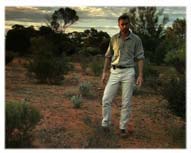
Hannon and Flanagan moved out a few days after the main groups. Three days later they camped about 25 miles out from Coolgardie, held up by a horse who had thrown a shoe. They were still only half way towards the Mt Yule. Specking about Hannon found several nuggets and a couple of days later they had collected over 100 ounces. It was a momentous time in Australian history. For if some have described other Australian finds as the El Dorado, this would certainty become the mother of them all.
EXT. PAINTINGS/PHOTOGRAPHS
DON V.O.)
In the first week fifteen hundred prospectors converged on 'Hannon's Find', soon to be known as Kalgoorlie, and pegged leases. The winter rains started to fall
35
and the early ones found hundreds of ounces of gold gleaming in the wet soil.
EXT. BUSH - EVENING
OLD FILM LOOK images of the rain soaked ground as a digger thrusts in his hand pick.
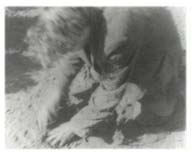
DON V.O.)
Some worked on their hands and knees in a frenzy, their knives thrusting into the red mud.
EXT. OLD PROSPECTOR'S CAMP - NIGHT
Around a camp fire illuminating an old prospector's camp, DON continues;
DON
But Kalgoorlie didn't boom over night. 'Hannons' was seen as one of the many finds that year. It didn't have the glamor of Coolgardie where gold had been chopped from reefs with tomahawks. The early prospectors were after the alluvial or surface gold and it wasn't until 4 years later that Kalgoorlie's great wealth began to be understood.
EXT. OLD PHOTOGRAPHS
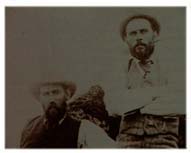
DON V.O.)
Two men, Brookman and Pearce, were sent up from Adelaide by a group of financiers. 15 days later, they camped with thousands of other prospectors at 'Hannon's Find.' They found that all the rich alluvial areas had been pegged.
36
The only areas left were the Ironstone hills, over 3 miles away.
EXT. OLD PROSPECTOR'S CAMP - NIGHT
DON
Hannon and other prospectors had looked over these hills before and had decided they were not gold bearing. Brookman and Pearce spent a fortune pegging hundreds of acres of these hills and it became known as 'Brookman's Sheep Run.' Named by the prospectors in scorn of their ludicrous pegging. But in poetic justice, Brookman's Sheep Run was to contain the golden fleece that Western Australia and indeed Australia has ridden on for over one hundred years. It contained gold in mysterious lode formations and became Kalgoorlie's golden mile. The richest square mile of gold bearing ground in the world. And it is still being worked today.
EXT. MINES OF KALGOORLIE - DAY/NIGHT
MUSIC up.
Dramatic shots of mining activity.
Both above and below ground.
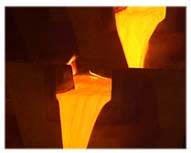
INT. NEW TO OLD PHOTOGRAPH
A recognisable scene around Kalgoorlie MORPHS back to an original SEPIA PHOTOGRAPH.
MUSIC down.
WENDY V.O.)
As the centenary drew to an end, the original goldfields of Bathurst had long declined.
37
INT. OLD PHOTOGRAPHS
Old SEPIA sketches depict underground mining in Victoria.
WENDY V.O.)
Victoria and Queensland had already financed their own transition from alluvial to deep underground mining with little help from overseas finance. But this pattern of development didn't occur in Western Australia.
INT. NEWSPAPER CLIPPINGS
Old headlines and articles depict massive financial input.
WENDY V.O.)
British capital flooded in and the new goldfields boomed. London was the financial capital of the world and there were millions of pounds waiting development.
INT. SHAFT BAR (KALGOORLIE) - DAY
DON sits in an old dark wood lined bar.
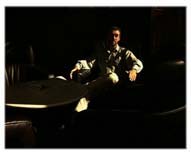
DON
The mines of Coolgardie were floated with impressive style. Holes in the ground were converted to rich gold mines with a stroke of a pen, all hopelessly overcapitalised. In the last 3 months of 1894, 77 new companies were registered in London. Then the ore failed at depth. The rich Londonderry float, which so impressed the British investors, crashed. Bayleys Reward and others also failed to live up to expectations. It appeared that the gold ran out when the underlying bed rock was reached.
38
INT. OLD PHOTOGRAPHS
Old photographs of Perth.
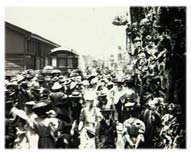
WENDY V.O.)
Each week ships were still unloading hundreds more eager gold seekers. They camped on the outskirts of Perth with teamsters to load their drays and carts for the long journey to the goldfields. Typhoid became a problem with poor sanitation.
INT. OLD PHOTOGRAPHS
Old photographs of Kalgoorlie.
WENDY V.O.)
Hannon's Find, which was officially proclaimed the town of Kalgoorlie, didn't escape disease either. With 3000 prospectors still working the alluvial fields it had its typhoid problem too.
INT. OLD PHOTOGRAPHS
Old photographs of the hospital.
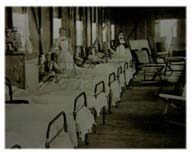
WENDY V.O.)
The early hessian Kalgoorlie hospital had to struggle with this as well as the dust and the flies. Only two pints of water was the daily ration for a nurse.
NURSE V.O.)
Night duty was particularly trying. It was almost impossible to sleep during the heat of the day in summer. Sometimes the temperature was over 116 degrees.
39
EXT. OLD PHOTOGRAPHS/SKETCHES
Old photographs and sketches of the old times walking to coolgardie.
OLD FILM LOOK shot or the sun.
VOICE OVER
Damn Coolgardie, damn the track. Damn Coolgardie there and back. Damn the heat and damn the weather. Damn Coolgardie altogether.
EXT. BUSH CAMP - DAY
OLD FILM LOOK of a prospector dryblowing.
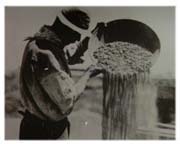
WENDY V.O.)
Because water was such a precious commodity in the arid regions of Western Australia, dryblowing was the method used for extracting gold.
OLD TIMER 4
No form of labour is more exasperating than dryblowing and in no way amusing. Dust is thick in your eyes and clogs your nose and your throat becomes as dry as lime. And the gold eludes your grasp and you're laboured for ten hours a day without a speck your spirits begin to flag.
INT. INT. SHAFT BAR (KALGOORLIE) - DAY
DON continues at the bar.
DON
But just when the goldfields were being discredited as surface wildcats, Kalgoorlie broke through the bedrock and struck a load that went 10 ounces to the ton. One of the richest lode systems ever discovered.
EXT. ROCKY OUTCROP 4 - DAY
40
OLD FILM LOOK image of a suited BUSINESSMAN. He is in contrast to the manual WORKER who is driving a peg into the ground.
DON V.O.)
The boom accelerated again and another 342 companies were floated in 1895. The boom raged through 96 and promoters bought up 100's of outcrops and leases. Fortunes were made on the speculative profits of the stockmarket.
INT. OLD BAR COOLGARDIE - DAY
COLOUR and DON continues.
DON
However crazy it was the wholesale purchase of underdeveloped outcrops over 100's of square miles bought about a rapid rate of prospecting, and discovery. There were 10 quick years of development. More British capital flooded in as more rich ore bodies were discovered in the area.
INT. RAILWAY CONSTRUCTION - DAY
OLD FILM LOOK vision of the railway being built.
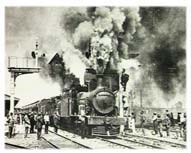
WENDY V.O.)
The railway pushed through to Kalgoorlie late in 1896 connecting Coolgardie and Kalgoorlie to Perth. Power generators were tracked up and the town had light.
INT. OLD PHOTOGRAPHS
Old SEPIA photographs of Kalgoorlie depicts the town at
41
the turn of the century.
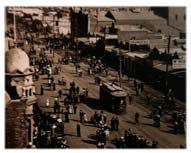
WENDY V.O.)
Government offices, law courts and the post office with its bold four sided clock were built and trams ran down the main street.
INT. WATER PIPELINE - DAY
OLD FILM LOOK of the pipeline being constructed.
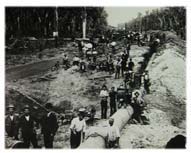
WENDY V.O.)
An engineering wonder was constructed, with the 300 mile pipeline from Perth to bring water to the goldfields. The town boomed with over 30,000 people working in the area.
INT. OLD PHOTOGRAPHS
MUSIC break.
Old photos depicting prospecting and daily life around the Goldfields.
INT. PALACE HOTEL - DAY
An old photograph match dissolves to WENDY, who glides down the sweeping staircase.
WENDY
Kalgoorlie probably felt it really had come of age when this magnificent two story Hotel was built. The Palace Hotel, with its bars handsomely fitted and stocked. A real oases in the dry Australian desert.
She reclines in the lobby lounge chairs.
42
WENDY
It also provided one comfort long neglected, lounge chairs, to soothe the jaded magnate. In XXXX a young man by the name of Herbert Hoover, who later became the XXth President of America, was sent here by the British firm of mining engineers, Bewick Moreing & Co. As a field agent Hoover was involved in the acquisition and managing of mining properties. A lot was said about Hoover and he acquired a great many enemies, not the least for introducing prohibition during the Al Capone years. While in Australia he gained a reputation for ruthless- ness and was called a womanising rogue whose unscrupulous behaviour was hardly desirable presidential material. Years later after leaving Kalgoorlie he penned these enduring words to a local barmaid.
INT/EXT. POEM & VISION
A montage sequence of shots of bougainvillaeas, stars, flowers and sunsets over a slow pan of Hoover's poem.
Mournful MUSIC.
HOOVER V.O.)
Do you ever dream my sweetheart, of a twilight long ago, of a park in old Kalgoorlie, where the bougainvillaeas grow. And a tide of bliss swept surging through the currents of our blood. Years have flown since then, fleet as orchard blooms in may, but the hour that fills my dreaming, was it only yesterday? Where you kissed me in
43
the twilight, of a summer long ago. I have fought my fight and triumphed, on the map I've writ my name. But I prize one hour of loving, more than fifty years of fame.
INT. PALACE HOTEL - DAY
WENDY continues the story.
WENDY
But one thing was sure, he was a romantic poet.
EXT. CAMPFIRE - SUNSET
DON sits by a campfire in the middle of the bush.
DON
By now most of the surface deposits were exhausted and the mines went deep. Capital and the big mining companies moved in with plant and machinery and the prospectors had moved on. The alluvial heydays were over. Around Australia the trend continued. Queensland and Victoria all experienced huge downturns. In 1900, 75,000 workers were working the goldfields and by World War 1 only 6000 were left in the industry. The world was changing, and in 1914 the prospector was about to make his name on another front.
EXT. WORLD WAR 1 FOOTAGE.
Dramatic shots Of WW 1
44
DON V.O.)
The men of the Australian goldfields joined the men at Gallipoli. The trenches they dug weren't for gold, but the glory of the British Empire.
Written and Directed by
Graeme Beck
Produced by
Ron Lange
Stephen Ibbotson
Doug Wilkinson
Presented by
Don Millar
and
Katrina Campbell
Cast
Edward Hargraves - Ron Lange
James Nash - Nial Roan
Arthur Baily - Bruce Denny
William Ford - Mick Rodgers
The Judge - Steve Ibbotson
Lister - Nathan Walton
Tom - Dan Healy
45
Margaret Kennerdy - Wyndie Mason
Mrs Farrell - Jodie Williams
Sovereign Hill
Stagecoach Drivers - Mick Daly & Kevin Gayle Police - Anthony McKnight & Simon Vendy
Goldfinder - John Menzies Photographer Tony Lang Baker - Stewart Henderson Blacksmith - David Sharp Digger - Andrew Sharpe
Steam Engine Driver - John Mitchelle & Mathew Dowler
Gold panner - Eddie Kolene Gold digger - Martin Scuffins Washing lady - Theilie Wilson Cradle operater - Wayne Baker Trooper - Jarrod Page
Shop Assistants - Lisa Richards, Shae McDonald & Tamara Pipkorn
Kalgoorlie
Businessman - Mark Kont Pegger - Hugh McGinty Frenzy diggers - Nathan Walton & Travis Hooper Dry Blower - Michael Bell Scobie - Jason Cook
Camel Prospector - Chris O'Hora
Wheelbarrow digger - Reg Brian-Davis
Character Voices
Maurie Ogden - Sally Sander - Maurie Ogden - Peter Capp Ramsay McLean - Rodger Montogomery - Rainer Ender Bill McCluskey - Ross McDonald - John Clema Doug Wilkinson - James Lynn - Carina Toubeau.
Crew
Camera & Sound - Graeme Beck
Production Manager - Sanchia Robinson
Online by Fran Strono
Camera Assistant - Nathan Walton
Nathan Brown - Kalgoorlie 2nd Assistant
Casting consultant - Vivian Poulton
Telecine transfer - Production Facilities (WA)
Film processed at Atlab
46
Acknowledgements
Sovereign Hill
Coolgardie Tourist Bureau
Leeuwin Ocean Adventures
Airfield Riding School Kalgoorlie
Kalamunnda Camel Farm
Westline Clothing
Memory Lane
Peel Horseback Adventures
Jamie Hunt - Rodger Trudgeon & Brett Edgington - Irene Harvey
Cathy Sutherland - Vicky Papchuck - Nathalie Collins Rip Hayhow - Wendy Carter - Tonya Bataun - Stan & Norma Latchford Linda Groom - Sylvia Carr - Claire Baddeley - Clare Gervasoni Graeme McGregor - Bruce Davidson - Beverley Skinner - Susan Yaxley
Don Montefiere -Tom Byfield - Norm Buivids
Christine Downer - Ewa Narkiewics - Mary Lewis - David Harris Anne Cobham - Helen Smith - Alex Anderson - Bronwyn Peel
Barry Logan - Russell Brown - Derek Longhurst - Brian Beaton - Amy Taylor
Paintings reproduced courtesy of:
The National Library of Australia
The State Library of Victoria
Sovereign Hill Gallery
Ballarat Fine Art Gallery
Library of the Victorian Parliament
BHP archives
Photographs reproduced from the Battye Library
and the Museum of the Goldfields
World War I footage reproduced from Filmworld
47
Production made possible by the generous contributions from:
Terry Allen
Don Boyer
Brian Breese
Phil Crabb
Mark Creasy
Great Central Mines Ltd
Michael Harrison
Homestake Gold of Australia Ltd
Klaus Meyer
Normandy Mining Ltd
Ashok Parekh
Josh Pitt
David Porter
Sons of Gwalia Ltd
Neil Tompkinson
TKF Investments Pty Ltd
Lyn Wilkinson -----
NEC (logo)
Budget Rent A Car (logo)
BP Australia (logo)
Airlink (logo)
C. MM
48